
Nova Scotia Forestry Hall of Fame
The Forestry Hall of Fame was established in 2004 as a means of recognizing and honoring the significant achievements of individuals who have attained prominence and distinction in any field of forestry, and those who have made a major contribution to the development and advancement of forestry in Nova Scotia. Candidates may be chosen on the basis of their contributions in the field of Forestry Education, Research, Protection, Utilization, Harvesting, Policy or Silviculture but is not limited to these fields. Induction ceremonies are held during the Forest Professionals Annual General Meeting.
Below are the names of the individuals who have been voted into the RPFANS Hall of Fame. You will also see some notes regarding the extraordinary work they have each participated in throughout their respective careers.
If you would like to nominate a colleague or individual to be part of the RPFANS Hall of Fame,first check the nomination guidelines and the nomination application form, then please send an email to contact@rpfans.ca
Peter Neily
Inducted (2025)
Peter graduated from Middleton High School in 1972. Following graduation, Peter studied Forestry at the University of New Brunswick, graduating in 1977. He immediately began work for the Research Section of the Department of Lands and Forests, a job he held for 46 years until his retirement in 2023.
Peter’s career in forestry spans five decades, during which he has consistently demonstrated a profound commitment to understanding and interpreting the ecology of Nova Scotia’s diverse landscapes and forested ecosystems. His expertise in forest ecology has been instrumental in creating tools and shaping policies and initiatives aimed at preserving our natural resources for future generations.
Peter represented the Forestry Division on the first Integrated Resource Management (IRM) Planning Committee. The committee’s work formed the basis of IRM processes and Crown Land planning, and led to the development of the Ecological Land Classification for Nova Scotia (ELC), which then became the foundation upon which IRM planning was initiated.
Peter was instrumental in developing and leading the Forest Ecosystem Classification (FEC) for Nova Scotia. Under his leadership, the FEC for Nova Scotia remains a highly referenced and well-used guide for the assessment and development of
ecosystem-based forestry in Nova Scotia and beyond. Both the ELC and the FEC are used by forestry professionals, researchers, consultants, academics, NGOs and students throughout the province. The FEC is now part of the curriculum at the Maritime College of Forest Technology and the Nova Scotia Community College.
Peter has fostered competency in countless individuals in the use of the FEC. As a mentor, he continues to share his knowledge, expertise, and passion for forest ecology with aspiring students, woodlot owners, and forestry professionals. Peter was tireless in his pursuit of demonstrating what it meant to be a public servant and for teaching forest practitioners how to look at forest ecosystems in different ways. His constant advocacy for understanding the complexity of forest ecosystems reflects his deep-seated commitment to preserving the natural world for future generations to enjoy.
Timothy McGrath
Inducted (2025)
Tim graduated from Cathedral High School in Springfield, Massachusetts in 1972. In 1977, he earned a Bachelor of Science with Honors from Northeastern University, majoring in Mathematics.
During that time, he spent many weekends hiking in the White Mountains of New Hampshire where he discovered his true passion was forests. Tim moved north to the University of New Brunswick to obtain a Master of Science in Forestry, graduating in 1985.
He began work with the Department of Lands and Forests in 1986 as a member of the Forest Research Section, under the direction of Ed Bailey. At this time, investment in silviculture and forest research accelerated through policy and program initiatives. The list of Tim’s accomplishments is vast: he spearheaded the development, management and production of over 100 forest research reports; he developed a Variable Density Growth and Yield computer simulation model for softwoods and hardwoods which allowed forest managers and owners, for the first time in Nova Scotia's history, to accurately predict future yields for forested sites.
Tim led the establishment of an extensive network of silviculture trials backed by a continuously measured, permanent sample plot system. Tim was the author and driving force behind the Forestry Field “Yellow” Handbook. He was the lead author in writing Silviculture Guides, the Nova Scotia Growth and Yield Model, the Pre-treatment Assessment (PTA) System, and most recently the Silviculture Guide for the Ecological Matrix (SGEM) that currently guides the province’s ecological forestry practices.
Tim developed and oversaw the Forest Research Information System (FRIS). Virtually all the forest research data collected over the past 30 years, research trials, forest surveys, permanent sample plots, and ecological classification plots are housed in the FRIS. This treasure trove of data cannot be duplicated and will have lasting value. Tim was always in demand to speak at forestry conferences, as he had the ability to easily relay the results of forestry trials to forest practitioners working in the field. He was and continues to be a mentor to many forest professionals.
Diana Blenkhorn
Inducted (2024 (Posthumously))


It is my pleasure to write this letter of recommendation for Dianna Blenkhorn. She was one of the most amazing advocates for forestry in Atlantic Canada that I have known. I can think of no better applicant for the Hall of Fame. Sadly, she passed away in September, 2023.
I have worked closely with Diana, as our provincial representative on the MLB board (15yrs.) and after retirement, with her directly on several projects, one of which was to set up the Atlantic WoodWorks program. I have seen firsthand her passion for our industry and our region’s forestry programs and issues. Dianna was a rare and exceptionally talented lady.
She was President and CEO of the Maritime Lumber Bureau for almost 30 years. This, on its own, was a huge accomplishment.
Her ability to manage the Softwood Lumber trade disputes was legendary, both in Canada and the United States. It was her incredible memory, her understanding of the trade issues, and her determination that helped the Atlantic region obtain multiple exclusions from several secessional U S trade duties. Legal counsel from both countries relied on Dianna to explain the issues that made Atlantic Canada different and led to our exclusion from trade remedies that were applied to the rest of Canada. These exclusions saved our regional industry millions of dollars annually. To ensure our products could enter the U. S. duty free, she and staff of the MLB produced and managed a Certificate of Organ program, which accompanied all Atlantic shipments and was accepted by the US Customs and Border Protection agency as a required entry document.
When insect and disease issues became a trade barrier, she worked with CFIA and other federal agencies to ensure that these barriers were successfully removed through either the application of science or elements of heat treatment. This has led to the MLB now auditing, on CFIA’s behalf, the application of the HT stamp applied by our industry.
Dianna was also well known and respected both nationally and internationally. She could arrange a meeting with Federal or Provincial ministers with a single phone call and did so on many issues. She had the ability to select the right balance of associates to attend and make the pitch necessary to deliver the Maritime position. Most often we would get whatever we were proposing. She was an excellent orator and was respected for her ability to present her case in a balanced calm manner, but forcefully.
She would be asked at least annually to make a presentation to the Federal Senate as she was so well respected for her trade knowledge, and advocacy on behalf of our industry. MLB board members always agreed, and often stated, that because of Dianna “we punched well above our weight”!
The U S governments held her in such high regard that she was appointed several times by different US presidents as the Canadian representative on the American Lumber Standards Committee. She, of course, also sat on and chaired many Canadian boards and committees, the Canadian Lumber Standards Accreditation Board, the National Lumber Grading Agency and the Canadian Wood Council. Having attended several of these meetings, I have seen firsthand the respect and admiration that she was given by all agencies and federal staff, as well as industry associations in the rest of Canada.
In conclusion, I want to say that I can think of no better candidate for the Nova Scotia Forestry Hall of Fame than Dianna Blenkhorn. She stood apart as an extremely knowledgeable, well respected, tireless advocate for all things forestry and ‘an exceptional lady.’
Edward MacAulay
Retired Executive Director of Renewable Resources for Nova Scotia
Ian Millar
Inducted (2019)
 Ian Campbell Purves Millar started his career in Nova Scotia with the Canadian Forest Service (CFS) in 1977 supervising federal programs including forest pest detection, forest nurseries, research and public relations. In 1982, as Chief Implementation Officer, he oversaw the implementation of federal programs designed to enhance private land management and forestry research in Nova Scotia. His diligence in ensuring updated manuals for operations and procedures were essential to providing quality control which was critical to the success of the program. During these years, Ian represented the CFS on numerous provincial committees, boards and associations and provided leadership and expertise pertaining to all matters forest related. Most notable was his involvement with the Nova Forest Alliance Model Forest, and its many committees and working groups. Ian worked tirelessly in promoting the forest professional and gave freely of his time and felt personally rewarded with proclamation of the NS Foresters Association Act in 1999. Subsequently, he was instrumental in the formation of the Registered Professional Foresters Association of Nova Scotia (RPFANS). Since then he has championed Right to Practice legislation for forest professionals. Upon retirement, Ian became the first Executive Director of RPFANS and from 2005-2017 was extremely diligent in keeping the RPFANS both administratively and financially sound. He has been a long-time member of the Canadian Institute of Forestry, holding many board positions and contributing to national initiatives. Ian is also nationally recognized for his considerable involvement with forestry accreditation and has travelled the country reviewing forestry curriculums at all forestry degree granting institutions.
William Lloyd (Slim) Johnson
Inducted (2019)
 William Lloyd (Slim) Johnson arrived in Nova Scotia in 1977; accepting a position with the Department of Lands and Forest as director of operations and forest management for private lands. Under his guidance the Department increased its compliment of foresters and technicians who combined with consultants and contractors to deliver a private land program that many provinces sought to emulate. He was the key operational contact between the province and the federal government for the forestry agreements that funded much of the private land forestry. Balancing a multitude of private landowner objectives with government funding programs and objectives required vision, commitment and a shrewd understanding of the relationships and interactions of land ownership. His impeccable professionalism and humanity enhanced how the province understood the form and function of these forests within the larger context of provincial forest management and wood supply. Slim Johnson was an early proponent of professional forester designation and his work, alongside others, lead to the formation of the Registered Professional Forests Association of Nova Scotia. Slim Johnson also received the Canadian Institute of Forestry’s Tree of Life award for outstanding contributions to forestry.
John Roblee
Inducted (2017)
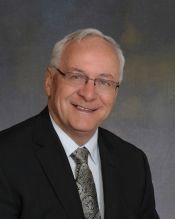
John Roblee has been integral to the organization and promotion of small private woodlot owners in Nova Scotia. As a citizen and landowner, he has worked tirelessly to further the rights and management capacities of owners of forest land. His first foray into private land forest management started during the establishment of community-based Group Ventures - woodlot owner controlled cooperatives. John's tenacious and relentless efforts created the Group Venture Association which developed technical and financial assistance and marketing savvy for more than a dozen groups. John also represented woodland owners o federal and provincial Forest Technical Advisory Committees, championing meaningful criteria and standards for forest improvement work on small woodlots. He served as Vice President of the Canadian Federation of Woodlot Owners and was one of it's first board members. John was instrumental in establishing the Association for Sustainable Forestry and has been a board member with the Nova Forest Alliance (Model Forest), Forest Products Association of NS, and the NS Primary Forest Products Marketing Board.